Books: Disaster Was My God
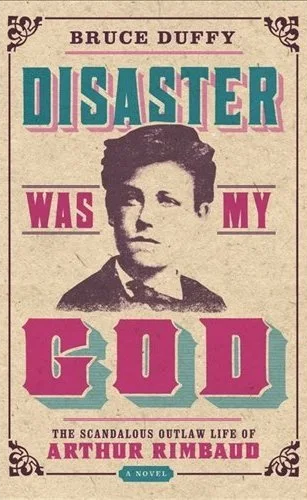
I found this a thoroughly compelling read. But I do think much of the credit has to go to Rimbaud himself for leading a life so extraordinary that even the bald facts are compelling. Most writers, after all, live fairly humdrum lives, and there’s nothing compelling about someone sitting in a study or shed at the bottom of the garden. An obvious exception is of course Byron, and it’s said that more people know about the life of Byron than have ever read a word of his poetry. It’s a strength of this book that it doesn’t ignore the poetry. Duffy is clearly steeped in it and urges the reader to get acquainted with it.
The style of Duffy’s writing is another strength. It’s racy, pacy, often wonderfully concise. I love the expression ‘perfect malevolent innocence’. Duffy makes good use of bald phrases. For instance, ‘Dazed-eyed. Spittle-lipped. Lower teeth jutting’. And then, ‘Double man. Double sex and double mind.’ I’m not always a fan of verbless sentences. Some writers overuse them. Annie Proulx, for instance. But Duffy uses them sparingly and very effectively. The narrative bounces along and carries the reader with it. I did wonder about the use of some of the language. For instance, ‘Judas! Go screw yourself.’ But then that struck me as an entirely appropriate translation of an expletive that Rimbaud might have used such as ‘Va au diable!’ Amazing, though, how much more venomous it sounds in French!
The book is justifiably called a novel, but it does mix straight biography and richly imagined real events. I particularly enjoyed the scene in the flight from Harar, where Mrs MacDonald accuses Rimbaud of being a vile gun-runner and he accuses her of being a high-minded hypocrite since she’s happy to accept his help in rescuing her family through money he’s made from the sale of guns. I suppose it’s inevitable in fiction that an author takes sides, whereas in straight biography the writer is expected to take a more objective view. Verlaine, for instance, comes out of this novel very badly. On the other hand, Duffy stresses his generosity in acknowledging Rimbaud as the greater poet. But Rimbaud, too, given his savage contempt for almost every other poet, is sometimes surprisingly generous in praise of Verlaine. All in all, then, a great read.

 Les Brookes